
BARBRA STREISAND
Before you watch and listen
- What makes someone a star? Is it talent, hard work, appearance, personality, or the ability to connect with an audience? Explain your opinion.
- Does fame necessarily make people happy? What might be the advantages and disadvantages of being recognized wherever you go?
Barbra Streisand: Interview Listening Task
Watch the interview and choose the best answer for each question. Listen for the details as well as Barbra's reflections on fame, relationships, and the stories that surround public figures.
Watch the interview
Interview: The Late Show with Stephen Colbert. The questions are based on the interview transcript supplied for this lesson.
Choose the correct answer
1. How does Barbra describe her own attitude towards being famous?
2. Why did she invite Sophia Loren to her house?
3. What does Barbra suggest about the psychology of performers?
4. What does Barbra imagine might have happened if her father had lived?
5. Why was playing other characters attractive to her?
6. What is the explanation behind the story about rose petals in the toilet?
7. How did Barbra and James Brolin first meet?
8. What did Barbra do when she first saw James?
9. How did James react to Barbra's direct comment about his hair?
10. What does Barbra say about cloning her dog Sammy?
My Name Is Barbra: A life in her own words
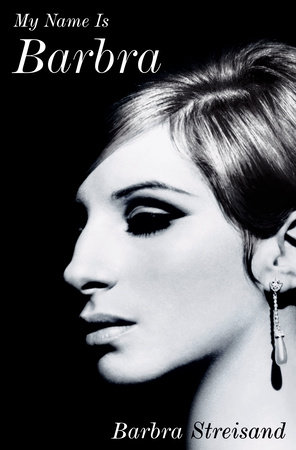
Published in November 2023, My Name Is Barbra is Barbra Streisand's extensive memoir. Across almost a thousand pages, she looks back on a career spanning more than six decades and reflects on the experiences that shaped her as an artist and as a person.
The story begins with her childhood in Brooklyn, New York, and follows her early ambition to become an actress. She describes the difficulties she faced while trying to establish herself, her first important appearances in New York nightclubs, and her breakthrough in Funny Girl, first on stage and later on film, for which she won an Academy Award.
Streisand also takes readers behind the scenes of her work in music and cinema. She discusses the recording of her albums, the long and demanding process of making Yentl, and directing The Prince of Tides. Her account includes friendships with well-known figures, her political and social advocacy, and her relationship with actor James Brolin.
The memoir is not simply a list of professional achievements. It offers her own perspective on ambition, insecurity, relationships, public attention, and the effort involved in building a life in the entertainment industry. Its tone has been described by the publisher as frank, funny, opinionated, and charming.
Author: Barbra Streisand
Publisher: Viking / Penguin Random House
Publication date: November 7, 2023
Length: 992 pages
Format: Memoir / autobiography
Reading and discussion
- Why might Streisand have chosen to write such a detailed memoir?
- Which stages of her career seem to have required the greatest determination?
- How might writing a memoir allow a famous person to challenge the public image others have created of them?
- Would you prefer to read a celebrity's autobiography or a biography written by someone else? Why?
Five expressions for B2–C1 learners
The third conditional: imagining a different past
In the interview, Barbra reflects on how her life might have turned out differently if her father had lived.
Example: If her father had lived, she might have made different choices.
The speaker is imagining a past situation that did not happen and considering how it could have changed her life.
Other modal verbs: could have, might have.
Practice: Complete the third conditional sentences
Complete each sentence using the verbs in parentheses. Write the complete missing verb forms.
Think beyond the interview
- Do you think a celebrity can ever have a completely private life? Why or why not?
- Why do you think people are fascinated by rumors about famous people?
- Barbra says she did not always see herself as a "real movie star." Why might successful people struggle to recognize their own achievements?
- How important is honesty in a long-term relationship?
- If you could ask Barbra Streisand one question about her career, what would you ask?
Save, download or print your work
Save all your listening choices, written responses, and grammar answers. You can also prepare a text file of your work.
Your completed answers
Your work is collected below. You can download it as a TXT file or select the text and copy it into TextEdit or another text editor.