
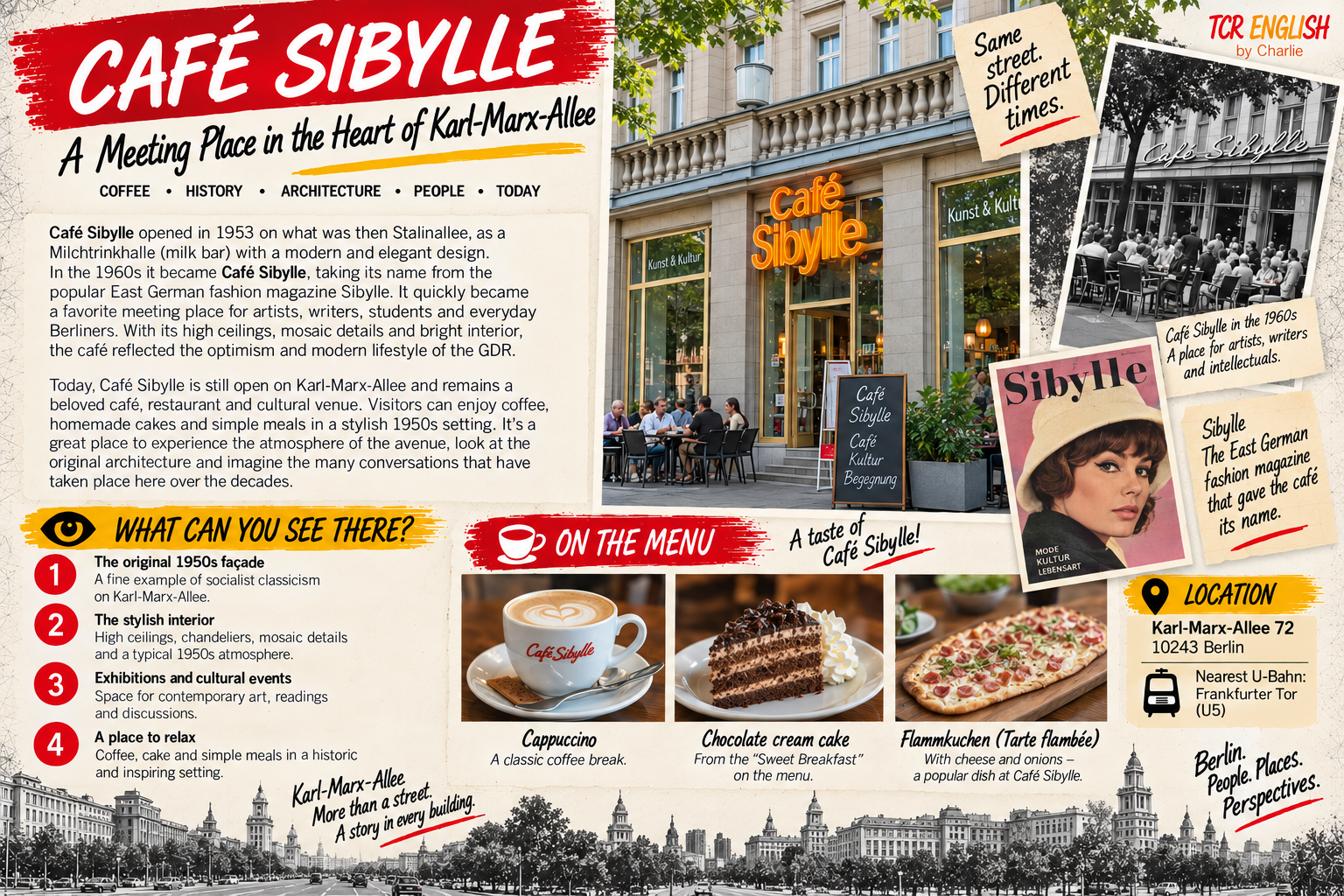
Café Sibylle Quiz
1. What is the name of the cafe featured in the video?
2. Which street, formerly known as Stalin Allee, is the cafe located on?
3. What does the speaker mean by "consuming the past"?
4. According to the speaker, what makes this cafe different from other theme spaces?
5. Besides being a restaurant, what else is the cafe described as?
6. What are the main artifacts presented as the cafe's attraction?
7. What items are mentioned as examples of what one might consume at the cafe?
8. Where is the museum space located in the cafe?
9. What does the speaker say designers in theme spaces dream of recreating?
10. What does the speaker say the intensity of history in this part of Berlin is?
SUMMARY OF MAIN POINTS:
• Café Sibylle is located on Karl-Marx-Allee (formerly Stalin Allee) and offers a unique experience of "consuming the past" by enjoying history alongside food like coffee, eggs, or a pastry.
• Unlike artificial theme spaces, the café is embedded directly in the actual historic area and functions as both a restaurant and a museum.
• Its main historic attractions include two surviving pieces from the former Stalin statue displayed in the museum space just behind the main dining area.
• The venue highlights Berlin's authentic chronological history, showcasing an intensity built up over time rather than recently invented theme concepts.
• Café Sibylle is located on Karl-Marx-Allee (formerly Stalin Allee) and offers a unique experience of "consuming the past" by enjoying history alongside food like coffee, eggs, or a pastry.
• Unlike artificial theme spaces, the café is embedded directly in the actual historic area and functions as both a restaurant and a museum.
• Its main historic attractions include two surviving pieces from the former Stalin statue displayed in the museum space just behind the main dining area.
• The venue highlights Berlin's authentic chronological history, showcasing an intensity built up over time rather than recently invented theme concepts.
Stalinallee (Karl-Marx-Allee) Quiz
SUMMARY OF MAIN POINTS:
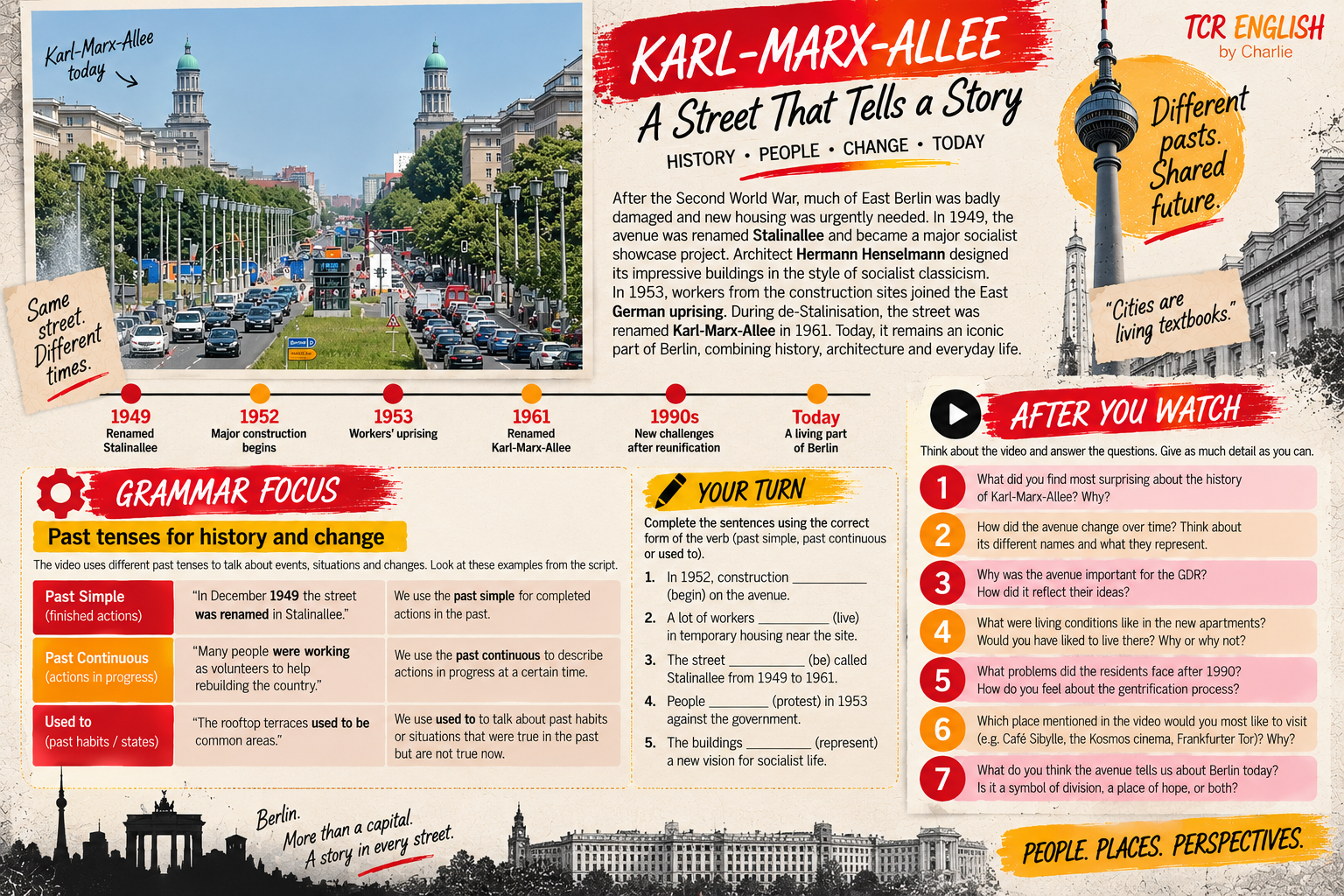
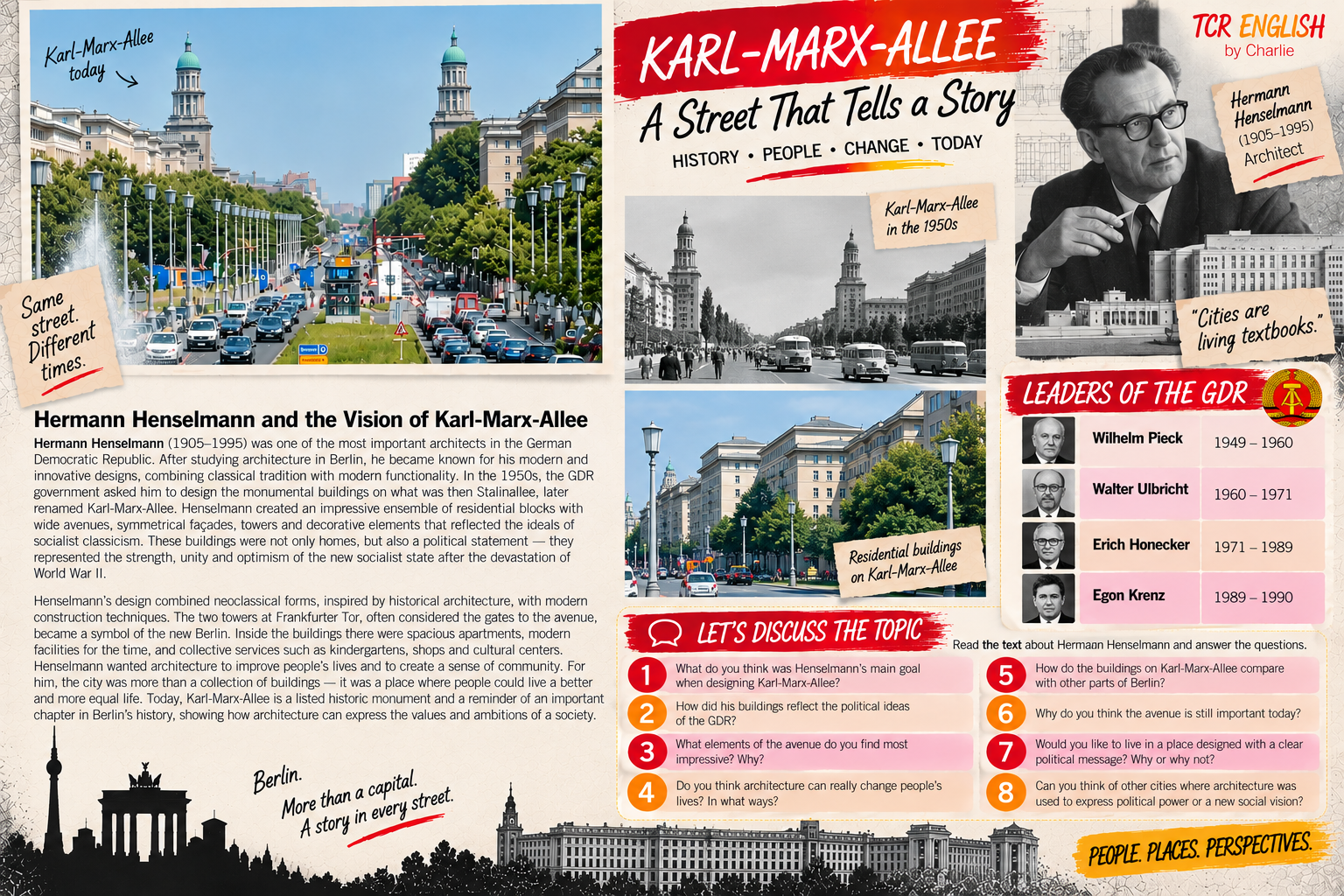
• Stalinallee (now Karl-Marx-Allee) was built to showcase GDR grandeur in Socialist Classicism style, where citizens volunteered 300 hours of labor to qualify for apartments.
• The famous June 1953 workers' uprising took place here, and the large Stalin statue was later removed during de-stalinization.
• Following German reunification in 1990, ownership transferred to the Treuhand, leading to gentrification, rising rents, penthouse conversions of rooftop terraces, and tenant conflicts.
• Berlin faced a massive housing shortage, prompting the state to begin buying back apartment blocks in 2019, with Cafe Sibylle serving as a key historical information point.
• Stalinallee (now Karl-Marx-Allee) was built to showcase GDR grandeur in Socialist Classicism style, where citizens volunteered 300 hours of labor to qualify for apartments.
• The famous June 1953 workers' uprising took place here, and the large Stalin statue was later removed during de-stalinization.
• Following German reunification in 1990, ownership transferred to the Treuhand, leading to gentrification, rising rents, penthouse conversions of rooftop terraces, and tenant conflicts.
• Berlin faced a massive housing shortage, prompting the state to begin buying back apartment blocks in 2019, with Cafe Sibylle serving as a key historical information point.