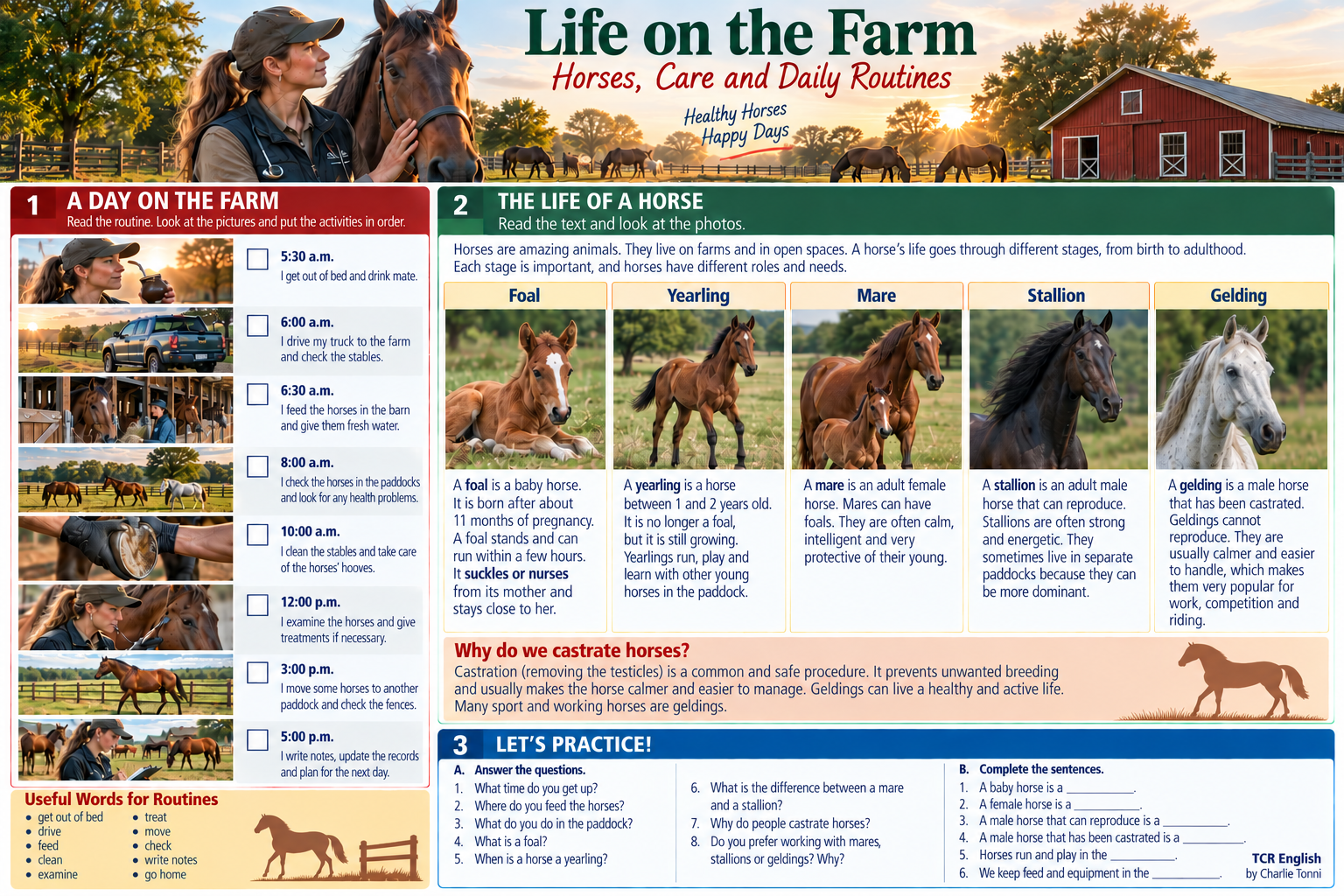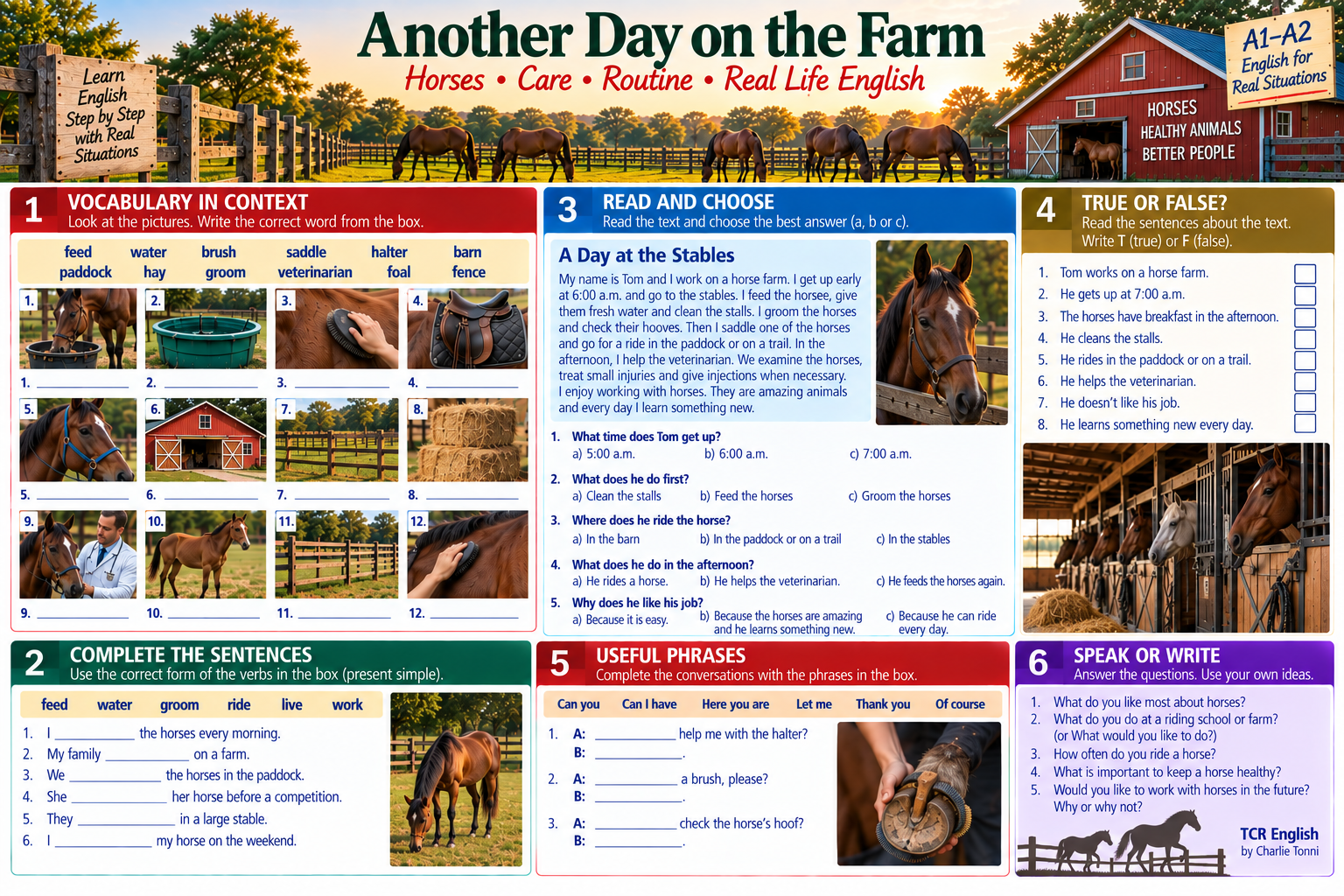
A Horse Vet's Routine

Everyday English for Life on the Farm • A1–A2

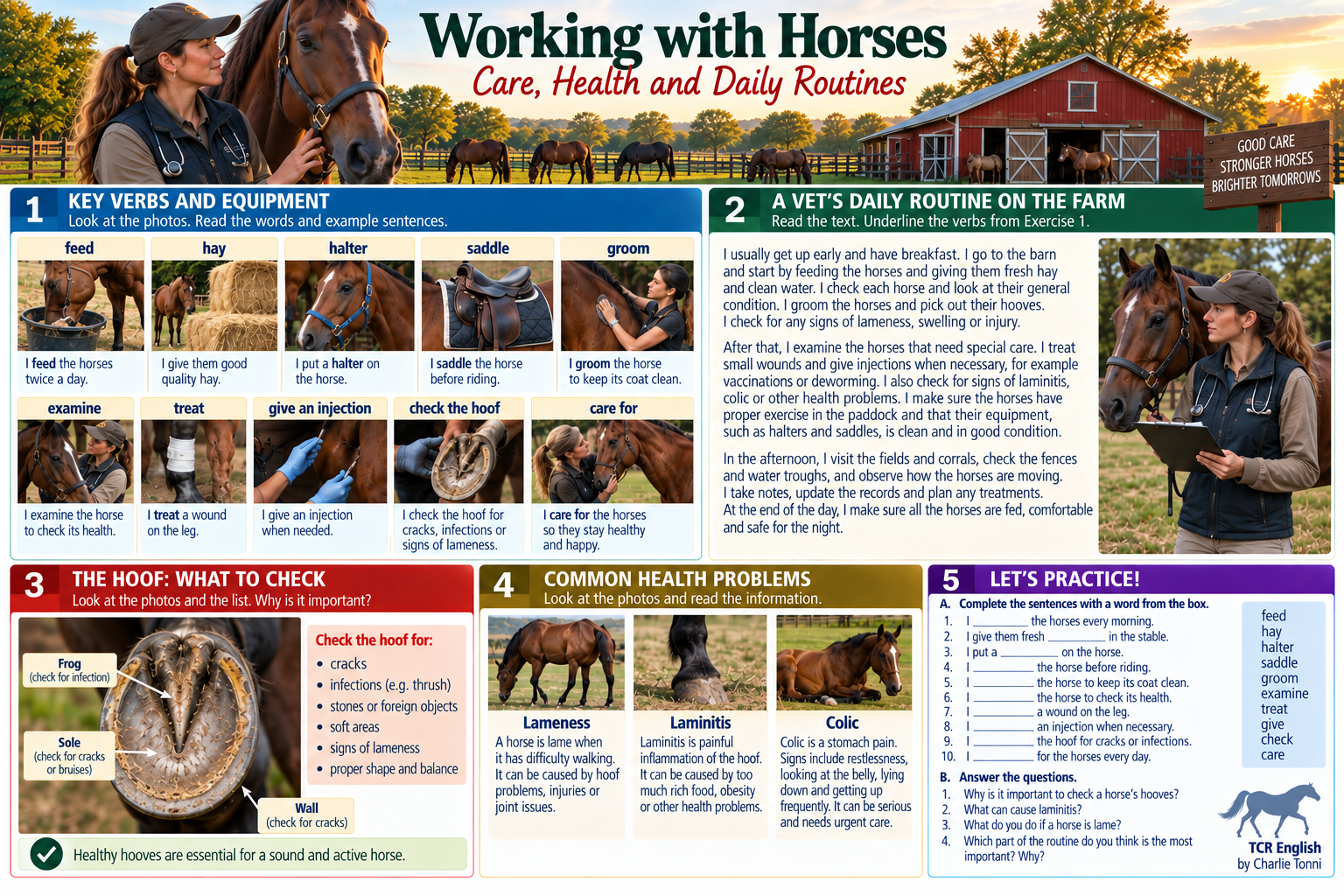
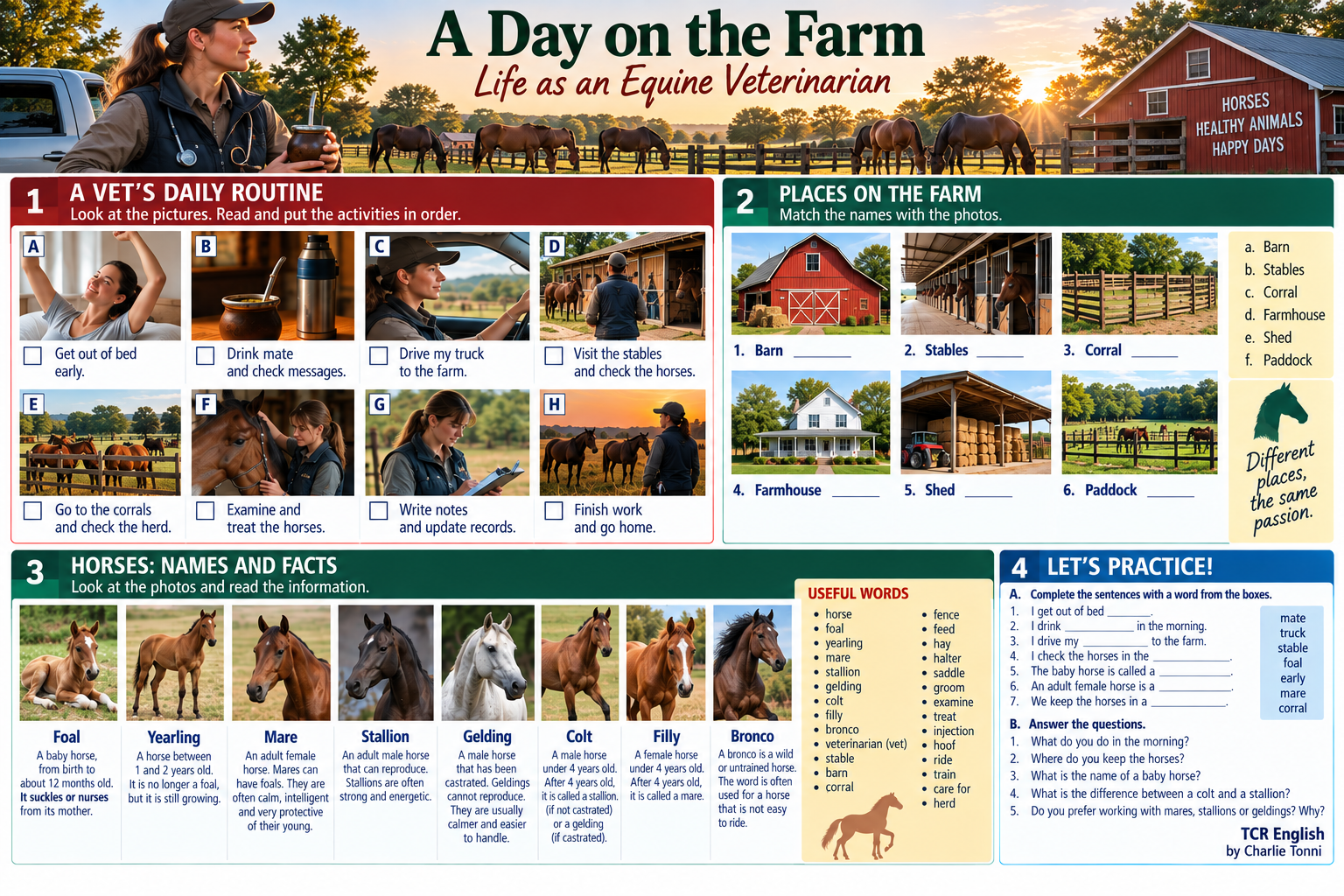
CLUE: Think about the first part of the lesson. A horse vet gets up early, goes to the farm, visits the barn and stables, checks the horses, examines their health, treats problems and cares for the horses every day. Read each clue and type the correct word.

1 — Complete the Sentences

Type the correct word in each gap. Use each word once.

1 I get to the stables early and the horses. (give them food)
2 I give them fresh and clean water. (dried grass for horses)
3 Then I the horses and check their coats. (clean the coat with a brush)
4 I put a on the horse before leading it out. (headgear used to lead a horse)
5 I each horse and check its temperature, heart rate and general condition. (look carefully at the horse's health)
6 I the hooves and look for cracks, infections or signs of lameness. (look at something carefully for problems)
7 If a horse is sick or injured, I the problem and provide appropriate care. (provide medical care)
8 When necessary, I an injection or apply a vaccine. (administer medicine with a needle)
9 I the horses for lameness, swelling or heat in the legs. (look to see if there is a problem)
10 At the end of the day, I the horses and make sure they are comfortable for the night. (look after)

Answer Key

1. feed
2. hay
3. groom
4. halter
5. examine
6. inspect
7. treat
8. give
9. check
10. care for
🐴 Horse Care — Veterinary Examination

Fill in the gaps.
Listen to the transcript and type the missing nouns in the boxes. Then click Check Answers.
0:00

it is time for a little horse care here

0:04

so uh corey tell me uh what what do you

0:07

do first of all tell me a little bit

0:08

about what you do

0:09

okay i'm a mixed animal so

i work on large and small

0:14

um medicine and okay so you

0:17

came out to the farm here today and what

0:20

does this horse need to have done to it

0:23

he just needs a general so physical

0:25

exam

0:26

and then hannah picked up on a few signs

0:30

of a possible

0:31

that we want to test him for

0:33

before we decide to vaccinate him and do

0:35

anything else to him

0:36

okay okay i suppose these are the things

0:39

when you're

0:39

with your horses every day that you

0:41

realize about them right right right and

0:43

they're getting very good at picking up

0:45

on the probably better than me

0:46

at some point

0:49

so what were you seeing hannah um so

0:52

like

0:53

he is super like i don't know he's just

0:55

weird in the back ends like

0:56

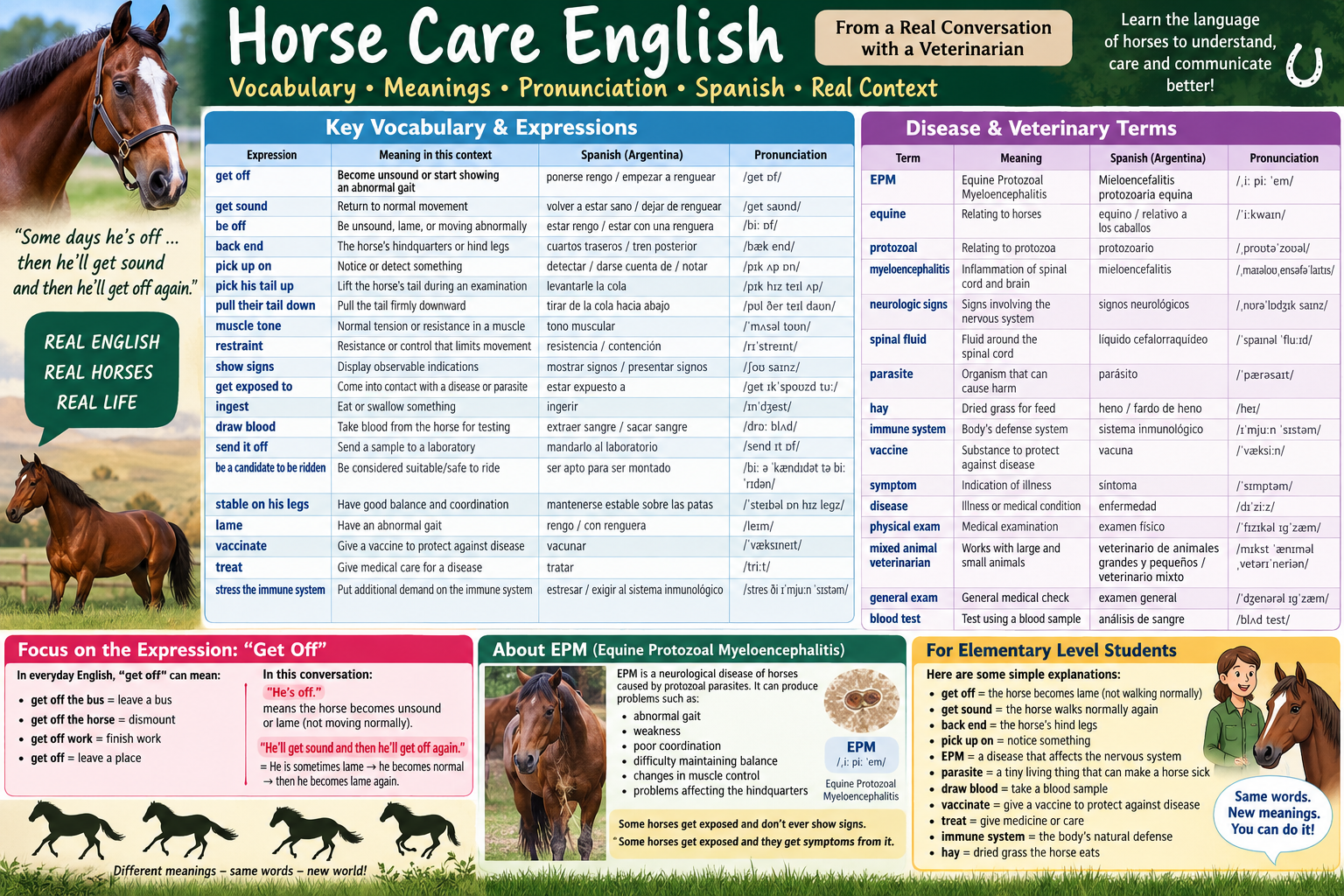
some days he's off yeah he's off and

0:59

then

1:00

he'll get sound and then he'll get off

1:01

again and then like we picked his tail

1:03

up and there's like

1:03

nothing nothing no no tone no risk

1:07

like restraint at all yeah okay so

1:09

normally when you do this they should

1:11

pull their tail down tight against their

1:14

their behind and he's not doing that and

1:15

that's one of the symptoms of

1:17

the disease that we're talking about

1:19

called epm

1:20

is the common name that we use it stands

1:23

for equine protozoa

1:25

myo myelitis horses don't pass the

1:28

disease to each other

1:29

it actually comes from other animals

1:32

possums can

1:33

carry it it's actually a and so

1:36

when they defecate in the

1:38

that parasite can be in there and so

1:40

then when they're grazing the hay they

1:41

ingest it

1:42

and it gets into their spinal

1:45

and it causes neurologic signs so

1:49

some horses get exposed and don't ever

1:51

show signs some horses get exposed and

1:52

they get

1:53

symptoms from it okay so to test for it

1:55

we draw and we

1:57

send it off okay is he going to like

1:59

that

2:01

i doubt it again i mean i only have

2:04

experience with my kids that

2:06

um you know the doctor the owner of this

2:10

horse actually didn't know

2:11

anything about the disease either

2:12

because we picked up on the symptoms he

2:14

was showing and then we told him about

2:16

it and he was here the other day and

2:17

he's like

2:18

my horses at home are doing the same

2:20

thing now so

2:21

we're gonna have to have corey go to his

2:23

house next they're bringing me some

2:24

business

2:25

right okay so now you'll get that tested

2:28

and then you'll know if you need to

2:28

vaccinate him for it or treat him for it

2:31

actually we'll know if he has the

2:33

disease because if he does have the

2:35

disease and he has neurologic symptoms

2:37

he may not be

2:38

a candidate to be ridden because it's

2:40

unsafe for somebody to ride him if he's

2:42

not

2:42

stable on his legs or lame all the time

2:45

he can't vaccinate for this

2:46

specific disease but we don't want to

2:48

stress his immune system with a vaccine

2:51

if he has it