
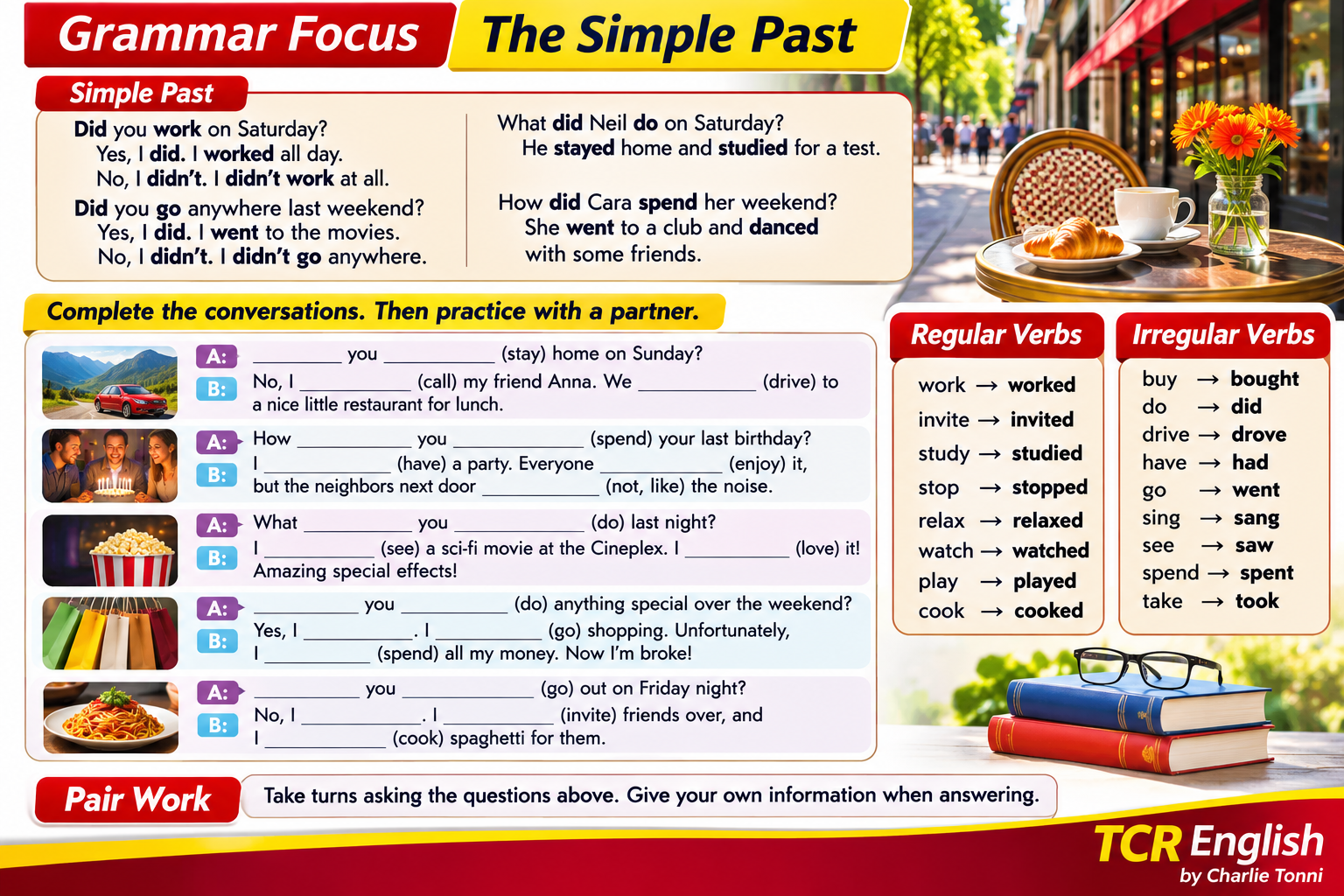
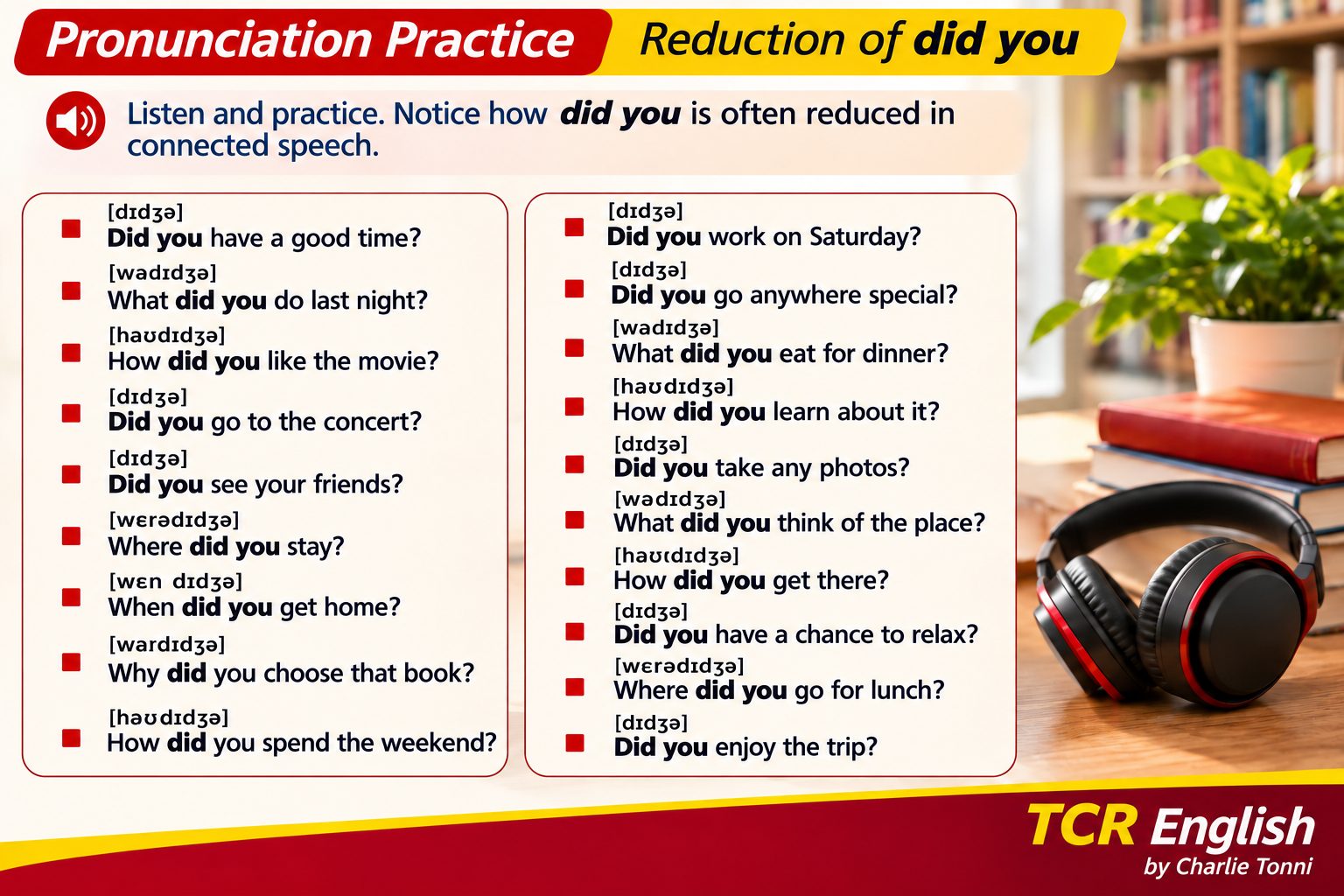
Reduction of did you
Listen, notice the connected sounds, and practice natural questions.
First, listen to the key phrases
Listen to each phrase separately. Notice how the words connect.
Listen to the reduced form of the two words.
The words flow together in natural speech.
Practice the complete question opening.
Keep the question flowing without a pause.
Listen to the transition into the reduced phrase.
Keep the first word clear and connect the rest.
Notice the natural rhythm of the phrase.
Now practice the complete questions
The large speaker plays the whole sentence. The smaller button plays the reduced phrase. The written English always remains correct.
Practice routine
- Listen to the complete question.
- Listen to the short phrase separately.
- Repeat the sentence aloud, copying the rhythm.
- Try the sentence at normal speed.
- Answer the question using your own information.
Teacher's note: The browser uses its built-in speech synthesis. Choose an English (United States) voice when available. The phonetic respelling encourages the reduction, but different voices may produce slightly different results.